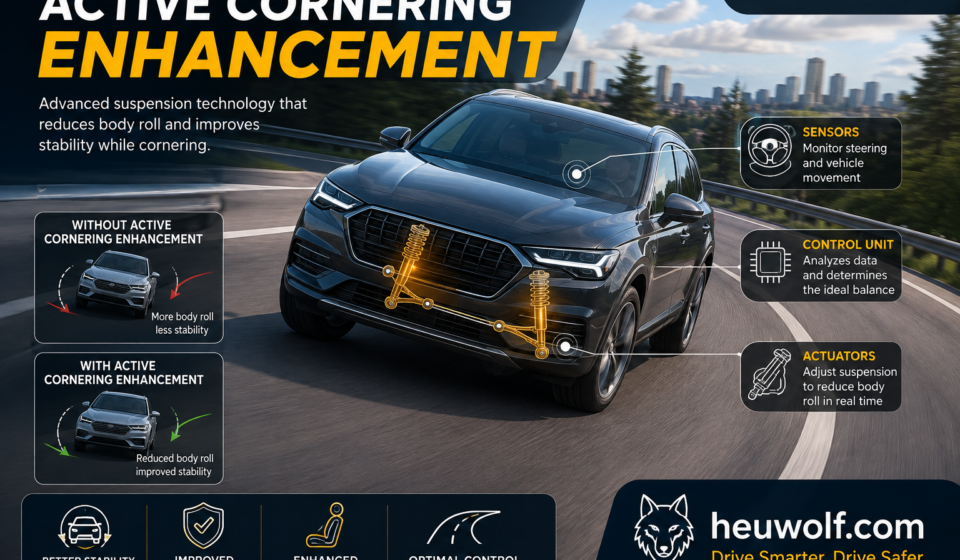

Modern vehicles are equipped with many technologies designed to make driving smoother, more comfortable, and more controlled. One such technology is active cornering enhancement, a system developed to help reduce body roll when a vehicle turns. This can be especially useful in larger vehicles, where noticeable leaning can occur during cornering. Understanding how active cornering enhancement works can help drivers appreciate its purpose and recognize potential maintenance issues.
What Is Active Cornering Enhancement?
Active Cornering Enhancement, often called ACE, is a suspension technology that helps control the amount of body movement when a vehicle corners. When a vehicle turns, its weight naturally shifts toward the outside of the corner. This causes the body to lean, a movement commonly known as body roll.
Traditional suspension systems use anti-roll bars to resist this movement. An active system takes a more responsive approach by monitoring vehicle behaviour and adjusting the stabilizing force when necessary.
The main goal is not to eliminate every movement from the vehicle. Instead, the system is designed to provide better control during cornering while allowing the suspension to remain comfortable during normal driving.
Is Active Cornering Enhancement Easy to Understand?
The basic principle is relatively simple. Drivers generally do not need to operate the system themselves because it works automatically. Sensors and control components monitor how the vehicle is moving, particularly when steering and cornering forces increase.
When the system detects conditions that could produce greater body roll, it can provide additional stabilization. The exact design varies between vehicles, so the components and operating method can differ depending on the manufacturer and model.
For owners, the most important point is that active cornering enhancement is part of the vehicle’s suspension and stability system. It therefore needs to be maintained just like other important suspension components.
Main Features and Applications
Body Roll Control
The primary function of active cornering enhancement is controlling body roll. During a turn, the system works to keep the vehicle’s body more stable instead of allowing it to lean excessively.
This can make cornering feel more controlled and predictable. It may be particularly noticeable in SUVs and other vehicles with a higher body compared with ordinary passenger cars.
Automatic System Operation
One useful feature is automatic operation. The driver normally does not have to activate the system every time a corner approaches. The vehicle’s sensors and control system monitor driving conditions and respond as required.
This allows the technology to work quietly in the background without adding another task for the driver.
Suspension Balance
A well-designed active stabilization system can help balance handling and ride comfort. A very stiff suspension can reduce body roll, but it may also make rough roads feel uncomfortable.
Active technology can provide additional support when cornering while allowing the suspension to retain a more comfortable character during ordinary driving.
On-Road and Off-Road Use
Active suspension technology can be useful in vehicles designed for both road and off-road driving. On paved roads, controlling body movement can improve the vehicle’s cornering behaviour.
On uneven surfaces, however, the suspension still needs enough movement for the wheels to follow the terrain. The design of an active system therefore has to consider both stability and suspension articulation.
Why Do People Use Active Cornering Enhancement?
Improved Cornering Feel
One of the main reasons for using this technology is to make cornering feel more controlled. Reducing excessive leaning can give the driver a greater sense of stability when navigating bends.
This does not mean the vehicle can safely take corners at any speed. The system assists handling but cannot overcome the limits created by road conditions, tyres, speed, or vehicle dynamics.
Greater Passenger Comfort
Body movement can also affect passengers. Excessive leaning and sudden changes in vehicle position may make some people feel uncomfortable.
By helping control unnecessary body roll, active stabilization can contribute to a smoother-feeling experience inside the cabin.
Better Balance Between Comfort and Handling
A vehicle needs to provide both comfort and predictable handling. These goals can sometimes conflict with each other when engineers rely only on fixed suspension components.
Active cornering technology provides another way to manage this balance. It can provide stronger stabilization during situations where it is useful without requiring the entire suspension to remain extremely stiff all the time.
Is Active Cornering Enhancement Safe?
Active cornering enhancement is designed to support vehicle stability, but like any mechanical or electronic system, it can develop faults. Proper maintenance is therefore important.
Drivers should pay attention to warning lights, unusual suspension behaviour, strange noises, fluid leaks on systems that use hydraulic components, or noticeable changes in handling.
If a warning related to the suspension or active stabilization system appears, it should not simply be ignored. The vehicle owner’s manual should be checked, and a qualified technician can diagnose the problem when necessary.
It is also important to understand that active cornering enhancement is a driver-assistance and suspension technology, not a replacement for safe driving. Good tyres, sensible speeds, appropriate vehicle loading, and awareness of road conditions remain essential.
Important Tips and Safety Note
Owners should follow the maintenance schedule recommended for their specific vehicle. Suspension components can wear over time, and an active system may contain mechanical, hydraulic, electrical, and computer-controlled parts.
If the vehicle begins behaving differently while cornering, have it inspected rather than assuming the change is normal. Trying to repair a complex suspension system without the appropriate knowledge can create additional problems.
For vehicles with hydraulic active stabilization, fluid levels and possible leaks deserve particular attention. A sudden fluid loss should be investigated instead of repeatedly adding fluid without identifying the cause.
Drivers should also remember that technology has physical limits. Wet roads, damaged surfaces, worn tyres, heavy loads, and excessive speed can all affect cornering performance regardless of how advanced the suspension system is.
Final Thoughts
Active cornering enhancement is designed to help vehicles manage body roll and maintain better control when turning. By responding to vehicle movement, the system can provide additional stabilization while still supporting everyday ride comfort.
For drivers, the main benefit is a more controlled feeling during cornering. For vehicle owners, understanding the system is useful because proper maintenance can help identify problems before they become more serious.
Ultimately, active cornering enhancement works best as part of a properly maintained vehicle. Safe driving habits, good tyres, regular servicing, and attention to warning signs are still essential for a comfortable and controlled driving experience.