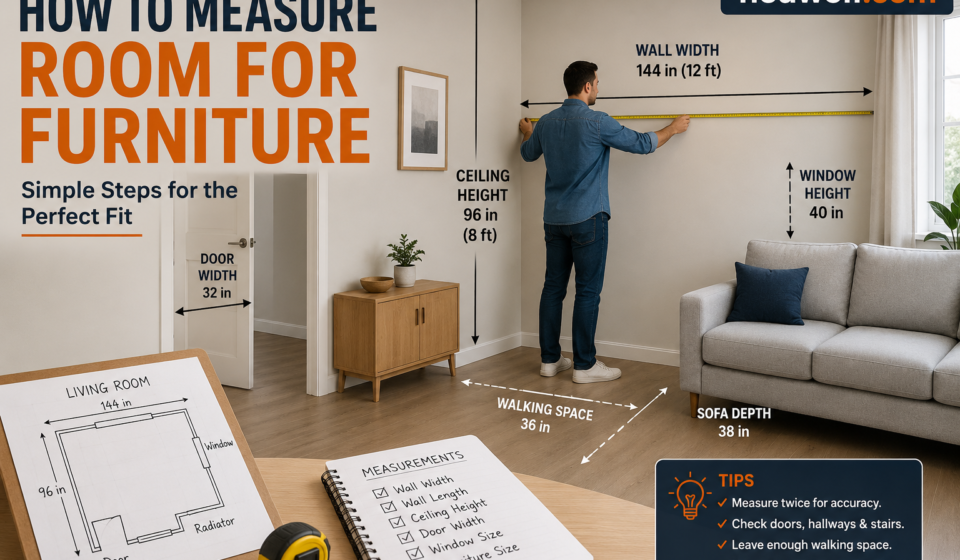

Buying furniture can be exciting, but choosing the wrong size can quickly turn that excitement into frustration. A sofa that looked perfect online may overwhelm a small living room, while a dining table may leave too little space to move around it. Learning how to measure room for furniture helps you choose pieces that fit comfortably, look balanced, and work well with the rest of your space.
The good news is that you do not need special equipment or advanced measuring skills. With a tape measure, a piece of paper, and a little planning, you can make much better furniture decisions.
What Is How to Measure Room for Furniture?
Measuring a room for furniture means recording the available dimensions of the space before buying or arranging furniture. This usually includes the room’s length and width, ceiling height, doorways, windows, and any areas that could affect where a piece can be placed.
The goal is not simply to find out whether furniture will physically fit. You also need to consider walking space, door clearance, furniture placement, and how the room will feel once everything is in position.
For example, a three-seat sofa might technically fit against a wall, but if it blocks a doorway or leaves almost no walking space, it may not be a practical choice.
Is Measuring a Room for Furniture Easy to Understand?
Yes. The basic process is quite straightforward. Start by measuring the room’s length and width. Then measure important features such as doors, windows, radiators, built-in cabinets, and other permanent obstacles.
It is also important to measure the route the furniture will take when it arrives. A large wardrobe may fit perfectly inside a bedroom but still be impossible to bring through a narrow hallway or doorway.
When shopping online or in a furniture store, compare your measurements with the product’s listed dimensions. Remember that furniture measurements are usually given as width, depth, and height, so check all three rather than focusing only on width.
Main Steps for Measuring a Room for Furniture
Measure the Room Length and Width
Begin with the overall dimensions of the room. Measure from wall to wall in both directions and record the numbers clearly.
If the room has an unusual shape, divide it into smaller sections and measure each section separately. This gives you a more realistic idea of the usable floor area.
It can also help to measure at different points if the walls are not perfectly straight. Small differences may matter when you’re trying to fit large furniture into a tight space.
Measure Doors and Entry Points
One of the most commonly overlooked steps is measuring the entrance. Before purchasing a large piece, measure the door’s usable opening rather than simply looking at the overall door size.
Check hallways, stairways, lifts, and turns as well. Furniture often needs to be tilted or rotated while being moved, so the route into the room can be just as important as the room itself.
Check Windows, Radiators, and Fixtures
Permanent features can limit your furniture choices. Measure the position and size of windows, radiators, electrical outlets, fireplaces, built-in storage, and other fixed objects.
For example, placing a tall bookcase directly in front of a window may block natural light, while positioning furniture too close to a radiator could interfere with comfortable use of the room.
Measure the Furniture Itself
Once you know the room dimensions, measure the furniture you’re considering. Record its width, depth, and height.
Do not forget about features that extend beyond the main frame. Reclining chairs, sofa arms, cabinet doors, drawers, and adjustable components can require additional clearance.
If you’re replacing existing furniture, measuring the current piece can provide a useful starting point. However, don’t assume a new item will have the same proportions just because it has a similar overall width.
Leave Enough Walking Space
A room can become uncomfortable when every available section of floor is filled with furniture. Try to think about how people will move through the space.
Leave clear paths between major pieces of furniture and important areas such as doors, windows, and seating. The exact amount of space needed depends on the room and furniture, but the basic principle is simple: people should be able to walk around without constantly squeezing between objects.
Why Do People Measure a Room Before Buying Furniture?
Avoid Buying Furniture That Is Too Large
Large furniture can dominate a room and make it feel cramped. Measuring first lets you compare different sizes before spending money.
This is particularly useful for sofas, beds, dining tables, wardrobes, and entertainment units because these pieces occupy substantial floor space.
Make Better Use of Available Space
Accurate measurements can help you discover arrangements you may not have considered. A smaller sofa might allow space for an additional chair, while a narrower dining table could make movement around the room much easier.
The objective is to create a room that is useful rather than simply filling it with furniture.
Reduce Delivery Problems
Checking measurements before ordering can prevent unpleasant surprises on delivery day. A piece that cannot pass through the front door, hallway, staircase, or lift can create unnecessary complications.
Taking a few extra measurements beforehand is usually much easier than dealing with an unsuitable piece after it has been delivered.
Create a More Balanced Room
Furniture should work together visually as well as physically. Comparing dimensions helps you choose pieces with proportions that suit the room.
For instance, an oversized sectional may look attractive in a large open-plan space but feel overwhelming in a compact living room. Measuring gives you a clearer picture before you make the final decision.
Is Measuring a Room for Furniture Safe?
Measuring a room is generally a simple household task, but basic care is still sensible. Keep the measuring tape controlled so it does not snap back unexpectedly, and avoid climbing on unstable furniture to measure high areas.
For ceiling height or difficult-to-reach areas, use an appropriate step ladder safely or ask someone for assistance. If you’re measuring around electrical equipment, do not remove covers or interfere with wiring simply to obtain a measurement.
For furniture placement, safety also means keeping exits, heating equipment, and essential access areas unobstructed.
Important Tips for Accurate Furniture Measurements
Write every measurement down immediately and label what it represents. A quick sketch of the room can make the information much easier to understand.
It is also helpful to mark furniture dimensions on the floor using removable painter’s tape. This gives you a visual impression of how much space a sofa, bed, or table will occupy before you bring it into the room.
Finally, double-check your measurements before ordering. Pay special attention to furniture depth, door clearance, and the delivery route. If a product’s dimensions are unclear, check the manufacturer’s specifications rather than estimating from photographs.
Final Thoughts
Knowing how to measure room for furniture is one of the simplest ways to make smarter furniture choices. Measure the room, check doors and access routes, note permanent fixtures, and compare the available space with the furniture’s full dimensions.
Most importantly, don’t measure only for a physical fit. Think about movement, comfort, storage, and how the finished room will function. A few minutes spent measuring carefully can help you avoid expensive mistakes and create a space that feels comfortable and practical.